Payment Pain Point: Removing Friction from the Customer Payment Experience
A payment experience can succeed or fail in the final moments of a customer interaction.
Your customer may be ready to complete a purchase, pay an invoice, or respond to a payment request, but if the process feels clunky, insecure, or inconvenient, the likelihood of that payment completing plummets. Baymard’s long-running research puts average cart abandonment at 70%, and it reports that 18% of U.S. online shoppers have abandoned an order specifically because the checkout process was too long or too complicated. Baymard also says the average large e-commerce site could increase conversion by 35% simply through better checkout design.
And that’s the bigger issue behind payment friction. It is not just a UX problem. It is a revenue problem.
Why payment friction shows up in so many businesses
Many companies do not think of their payment process as part of their customer experience strategy. They treat it as the final administrative step after the “real” work is done. But customers don’t see it that way. To them, the process of making the payment is directly tied to the overall convenience and trustworthiness of your business.
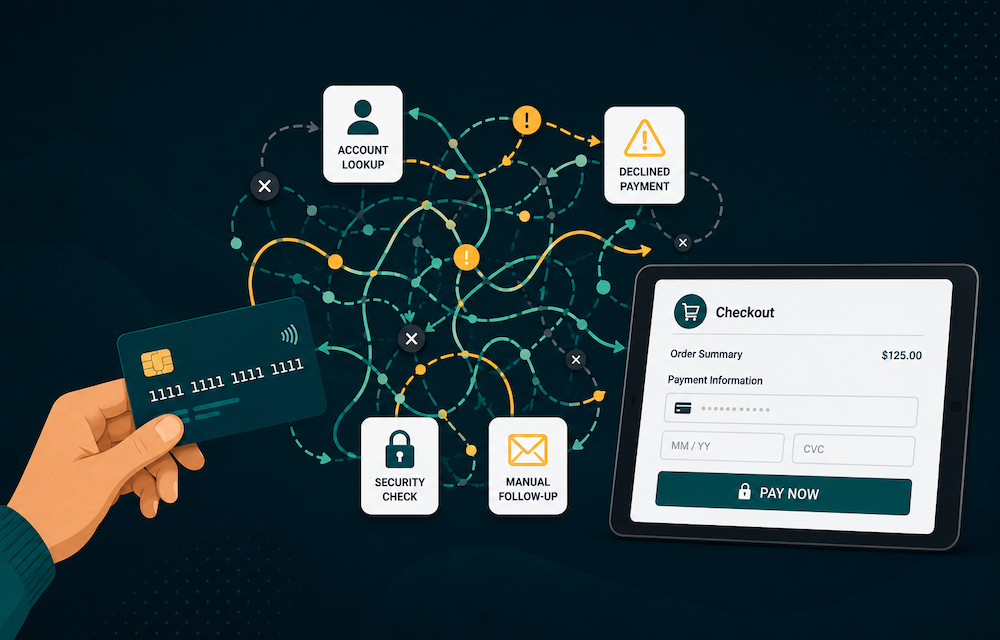
Friction often appears through outdated or disconnected workflows: a third-party payment portal that does not feel like the business’s brand, or a process that forces the customer to call an agent and read card details aloud. Even when those methods technically work, they add delay, uncertainty, and effort.
That matters because convenience increasingly shapes conversion. Stripe reported in 2025 that businesses saw an average 2x increase in conversion when offering Apple Pay earlier in the checkout flow through Express Checkout, compared with showing it only at the end. That is a strong signal that payment simplicity and immediacy can materially affect completion rates.
Customer expectations have changed
Customers now expect payment to feel fast, secure, and intuitive. They also expect flexibility. A modern payment experience is not just about taking a card online. It is about letting customers pay in the way that feels most convenient at the moment.
PYMNTS’ 2025 “How People Pay” research found that digital wallets are especially popular among connected consumers, reinforcing that people increasingly expect easy, low-friction digital payment options. Stripe similarly emphasizes that checkout problems often come from extra steps, poor mobile design, or unnecessary complexity near the point of payment.
For businesses, this creates a practical challenge: the easier it is for customers to pay, the faster revenue moves. The harder it is, the more likely a sale stalls, an invoice sits unpaid, or a support interaction stretches longer than it should.
The problem with forcing customers into your internal workflow
One of the most common payment mistakes is designing the customer experience around internal limitations rather than customer convenience.
If the payment process requires a customer to leave the branded experience and navigate an unfamiliar portal, trust drops. If they have to print something, mail something, or call in card details, the experience starts to feel dated. If they need help from a rep just to make a routine payment, the business is adding labor to a task customers increasingly expect to handle themselves.
This is especially important in B2B and account-based payment scenarios, where the goal is not just ecommerce conversion, but invoice collection, service efficiency, and relationship quality. Every manual handoff introduces delay. Every extra step gives the customer one more reason to postpone payment.
The Chargent approach: make payment easy, secure, and self-service
This is where Chargent’s approach stands out.
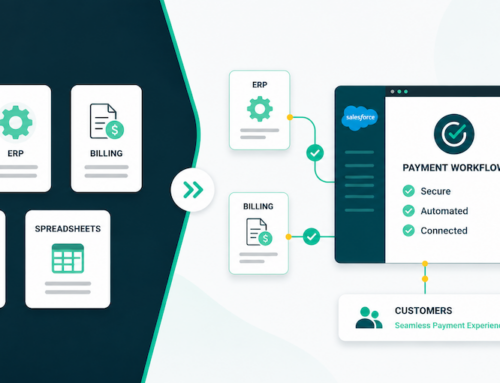
With Payment Request, businesses can send secure, click-to-pay payment links directly to a customer’s inbox. This way, they can avoid disconnected billing processes and simply open the link and pay through a more streamlined workflow. That removes friction for the customer while also reducing manual work for staff.
With Experience Cloud Payments, businesses can offer a branded self-service portal where customers can log in, view invoices, manage saved payment methods, and pay online in one place. That matters because self-service does more than improve convenience; it lets the business meet customer expectations while reducing avoidable support and finance workload.
The value is straightforward: fewer hoops for the customer, faster payment completion, and a payment experience that feels like a natural part of the brand rather than a disconnected afterthought.
Thought leadership means treating payments as part of the customer experience
Businesses often spend heavily to improve lead generation, sales enablement, onboarding, and support. But if the payment experience still feels clumsy, that work is undermined at one of the most important moments in the customer journey.
The better approach is to see payment experience as part of customer experience design.
Can customers pay without calling your team?
Can they complete payment without leaving a branded environment?
Can they use self-service options that feel intuitive and secure?
Can you reduce the time between customer intent and successful payment?
Those are experience questions, but they are also revenue questions.
Doing this right shouldn’t be in your nice-to-have column. The organizations removing friction from payments are not just making checkout prettier. They are improving conversion, accelerating collections, and making it easier for customers to do business with them.
Frequently Asked Questions
What causes friction in the customer payment experience?
Payment friction is often caused by long or confusing checkout flows, disconnected third-party portals, limited payment options, or workflows that require customers to call, mail checks, or take extra steps to pay.
Why is payment friction bad for conversion?
When paying feels difficult or inconvenient, customers are more likely to abandon the process, delay payment, or leave without completing the transaction.
How can businesses make customer payments easier?
Businesses can make payments easier by offering secure click-to-pay links, self-service payment options, branded online payment experiences, and a simpler path from invoice to completed payment.
What is a payment request link?
A payment request link is a secure link sent to a customer by email or text message that allows them to quickly open a payment page and complete payment online.
How do self-service payment portals improve customer experience?
Self-service portals let customers view invoices, manage saved payment methods, and submit payments on their own time, which reduces friction and gives them a more convenient payment experience.