Demystifying Payment Processing: The Salesforce and Chargent Solution
Imagine if all your business transactions cleared faster, with fewer errors and less management from your employees. That’s what efficient payment processing promises. To get there, it’s useful to get a basic understanding of what happens from the moment a customer pays to when that money lands in your account.
Here’s a brief look at what payment processing is, how it works, and how processing directly in Salesforce with Chargent can turn a cost center into a competitive weapon.
What Is Payment Processing?
Payment processing is the unsung process that enables money to travel securely from a customer to your company. It involves verifying the payment method, ensuring funds are available, sending information securely over banks and card networks, and settling the transaction in your account.
At its core, payment processing oversees three essential functions:
- Authenticates the payment method
- Transfers the funds from the customer to business accounts
- Logs the transaction between parties
For businesses of every size, from small startups to global conglomerates, payment processing is the behind-the-scenes infrastructure that keeps money flowing and shapes the customer experience at checkout.
How Payment Processing Works
Though a purchase can feel instantaneous, every sale goes through a series of complex background processes.
The consumer initiates payment through card, bank account transfer, or wallet. That data is encrypted and sent through a payment gateway, the secure pathway to the processor. The card networks (Visa, Mastercard, Amex, Discover) and the processor pass along the request to the issuing bank of the customer.
The bank approves or declines the transaction based on a number of factors, such as the availability of funds. The merchant gets an instant “approved” message, but the actual transfer of funds, referred to as settlement, will usually occur in one or more business days.
So, how long does a credit card payment take to process? The answer isn’t as simple as it seems. While approvals are immediate, settlement into your business account depends on your processor and payment method (credit card or bank account) and typically takes 24 to 72 hours.
Key Players in Payment Processing
Who exactly is behind every successful transaction? There are many players involved to carry out each step of the process:
- Customer: pays with a card, ACH, or wallet
- Merchant (your business): receives the money
- Payment gateway: securely forwards data to the processor
- Processor: enables the merchant, banks, and networks to process transactions
- Card networks: Visa, Mastercard, Amex, and Discover manage rules and routing
- Issuing bank: the customer’s bank that accepts or declines
- Acquiring bank: your bank, which receives the money
Historically, each of those players adds complexity and cost — fees accumulate as money travels from merchant to customer. That’s why so many entrepreneurs looking for the best credit card payment processing for small businesses encounter frustration: There are too many levels, and too few clear answers.
Chargent payment processing eliminates that by taking the process in-house. This gives businesses the opportunity for faster settlement and clear rates, and a more consistent payment experience.
Types of Payment Processing
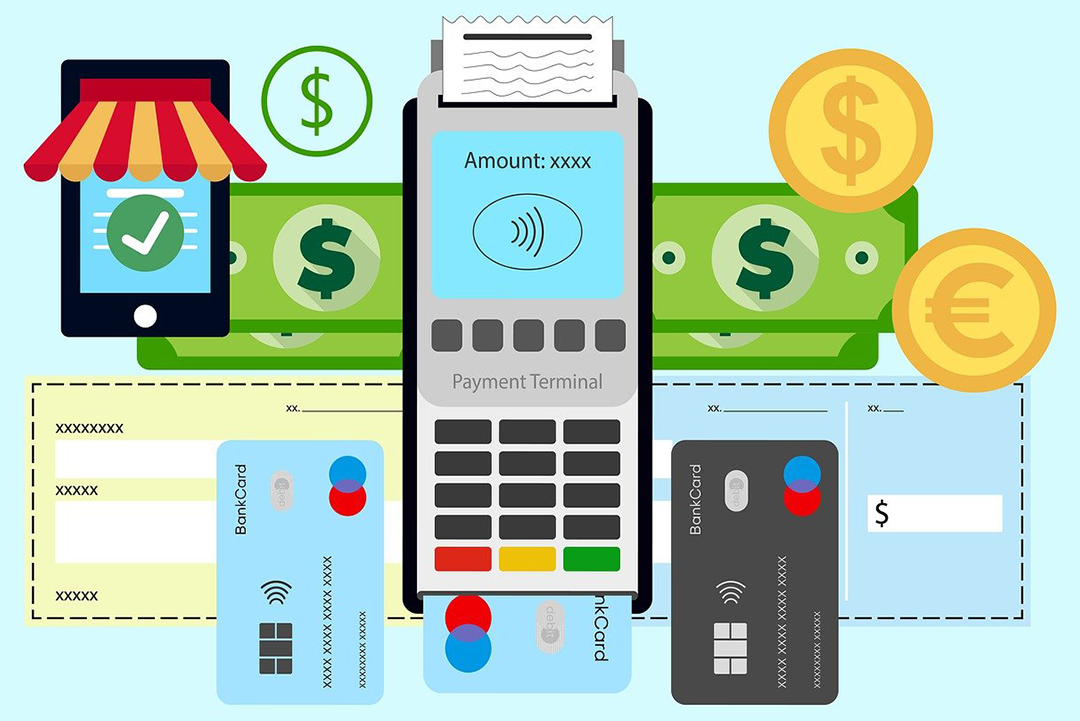
Payment processing looks different depending on the method:
- Card-present transactions are when a customer pays in person by chip or swipe, and have the lowest risk for fraud.
- Card-not-present transactions are online or by phone, enabling international commerce but with increased fraud exposure.
- Recurring payments occur through subscriptions, memberships, and installment plans.
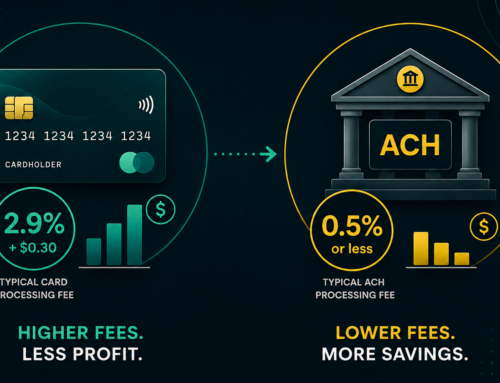
- ACH transfers move money directly between accounts, typically making the processing a cheaper alternative to cards.
- Mobile wallets like Apple Pay or Google Pay offer greater convenience through tokenized, safe transactions.
Recurring and ACH payments are particularly well-suited for SaaS and B2B companies, enabling predictable revenue with minimal processing fees.
Common Challenges in Payment Processing
Despite advances in technology in recent years, businesses still have many payment processing issues to deal with. Chargebacks and fraud remain costly, especially in card-not-present scenarios, making compliance and fraud prevention essential components of any payment system.
PCI DSS implementation adds overhead. While Salesforce-native tokenization solutions reduce PCI scope, they do not eliminate this requirement.
Fees are another pain point. With interchange, network charges, and processor markups, margins can evaporate quickly. Reconciliation can also turn into a time sink when payment data lives outside your CRM, forcing teams to manually import transactions and match records.
Finally, a poor payment experience, such as declined recurring charges or clunky checkouts, can cause unnecessary customer churn.
Why Salesforce + Chargent Helps
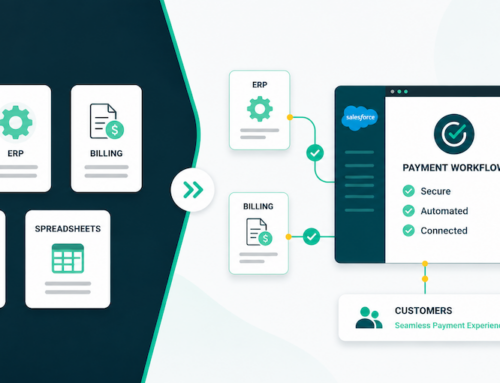
Shifting payments to Salesforce with Chargent decreases friction from siloed systems. Because it’s Salesforce-native, all payment data lives in the same platform as your customer records, so you gain full visibility without manual entry or imports.
With Chargent, you get:
- Unified payments in Salesforce: Accept cards, ACH, and recurring billing without leaving your CRM.
- Efficient processes: Build automated payment cycles using Salesforce Flow — no custom code needed.
- Simplified PCI scope: Payment data is tokenized, reducing risk.
- Detailed reporting: Payment data rolls into Salesforce dashboards for instant visibility.
- Flexibility: Use pre-built integrations to 30+ payment gateways, plus APIs for customized processes.
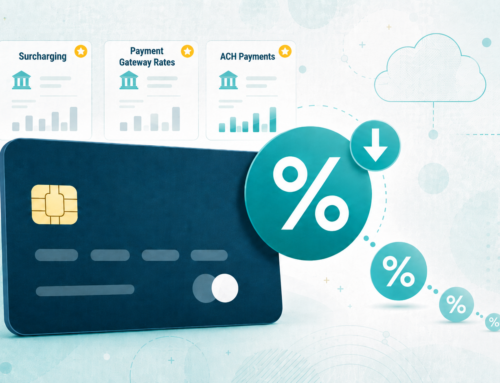
- Compliant surcharging: Pass on credit card processing fees while staying within card network rules.
For finance and ops executives, that means quicker closes, simplified reconciliation, and fewer errors. For customers, it means a smooth checkout experience that lets them pay their favorite way.
Making Payment Processing an Advantage
Every transaction is a story of customer trust, operational efficiency, and revenue realized. Payment processing is where those stories begin, and it needs more than a “set it and forget it” attitude.
With Salesforce + Chargent, payments are part of your growth strategy. You can automate recurring billing, reduce PCI scope, connect to 30+ gateways, and see real-time reporting along with your CRM data. That means faster closes, improved customer relationships, and more time to fuel expansion.
If you’re ready to get started, download our checklist for simplifying payments directly in Salesforce. Take the first step toward payments that work for your business, not against it.