
Credit Card Fees Explained: How to Recover Costs with Surcharging
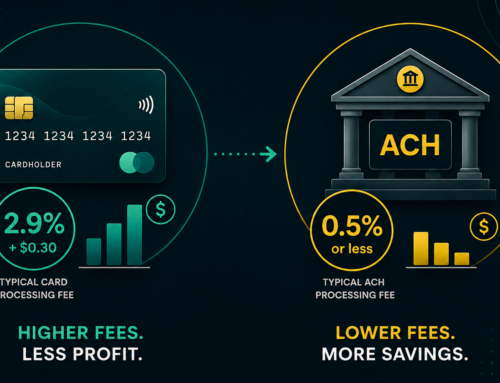
“Two-point-nine percent plus 30¢” might look harmless on a single receipt. Multiply that blend across thousands of transactions and a year’s worth of subscription renewals, and credit card processing fees quickly become the silent partner no one invited. A midsize B2B SaaS firm billing $200,000 each month will lose roughly $72,000 a year, enough to hire a new developer or fund a product sprint.
Below, we break down how those fees work, what they really cost, and how to recover them with compliant surcharging inside Salesforce using Chargent and InterPayments. Read on to learn how to make your payment system work for you, not against your bottom line.
What Are Credit Card Fees?
Every card transaction pays three tolls before funds reach your bank:
| Fee Type | Collected By | Typical Range* |
|---|---|---|
| Interchange | Card-issuing bank | 1.4 – 2.5% + 10–15¢ |
| Assessment | Visa, Mastercard, Amex, etc. | 0.13 – 0.15% |
| Processor Markup | Your gateway or acquirer | 0.10 – 0.50% + flat ¢ |
*U.S. averages (Visa, Mastercard, Amex), 2025. High-risk or keyed-in channels may skew higher.
The mix fluctuates with card type (corporate rewards cost more), industry risk, ticket size, and even how quickly you batch-settle. That variability makes budgeting tricky and makes any recovery strategy that simply “raises prices” feel like a blunt instrument.
How Credit Fees Eat Margin
Imagine three businesses, each running on Salesforce and accepting cards for payment:
| Monthly Card Volume | Blended 3% Fee | Annual Margin Lost |
|---|---|---|
| $50,000 | $1,500 | $18,000 |
| $100,000 | $3,000 | $36,000 |
| $250,000 | $7,500 | $90,000 |
While 3% is industry-average, some B2B merchants see effective rates greater than 3.3%. Over five years, the “small” leak above can snowball into $450,000. All of this lost capital could have been used to fund expansion, new headcount, or customer-experience upgrades.
High-volume retailers feel the compounding effect even harder: the more transactions you run, the more you spend to accept the very revenue you’ve already earned.
Traditional Ways To Absorb or Offset Fees
Many finance teams start with one or more of these common tactics:
- Price increases: Raise your product or service prices across the board to cover card fees. It’s easy to execute, but it can hurt competitiveness and muddy your pricing analytics.
- Cash or ACH discounts: Offer a discount to customers who pay with lower-cost methods like bank transfers or cash. Effective in person, but less so online, where card use is dominant.
- Processor negotiation: Work with your payment processor to lower your rate. It’s worth attempting, though the reductions are usually small at just a few basis points.
These methods are helpful, but rarely transformative. Why? Because they either dilute your pricing clarity, depend on customer behavior shifts, or produce only minor savings. Most importantly, none of them directly tie the cost to the cause, credit card usage.
That’s where surcharging stands apart. It isolates the expense and passes it only to the customers who opt for the costlier payment method, keeping your margins intact without penalizing everyone.
What Is Surcharging?
A credit card surcharge is a small, separately disclosed fee, typically 2% to 3%, applied only to credit-card payments. Customers who choose ACH, debit, or cash avoid it. Contrast that with cash-discounting, which lowers the sticker price for non-card payers but can muddle price perception.
Legal Landscape & Card-Network Rules
- State restrictions (U.S.): Surcharging remains banned in a handful of jurisdictions: Massachusetts, Connecticut, Maine, Puerto Rico, and — under California’s July 2024 “all-in pricing” law — most consumer-facing transactions in CA. Colorado allows surcharges but caps them at 2% of the ticket. Some states (e.g., New York, New Jersey, Minnesota) require that the surcharge never exceed your real cost of acceptance.
- Card-network limits (U.S.): Visa and Mastercard now cap U.S. surcharges at the lower of your actual blended rate or 3% and demand 30 days’ advance notice to both networks and your acquirer. Non-compliance can trigger mystery-shopper fines that start at $1,000 per incident and escalate rapidly.
- Debit & prepaid rule (U.S.): Never surcharge debit or prepaid cards, even when customers press “credit.” The practice can violate both state law and network rules.
- Canada at-a-glance: Credit-card surcharging has been legal nationwide since October 6, 2022, but is capped at 2.4% or your actual cost, whichever is lower, and is prohibited in Québec under its Consumer Protection Act. Merchants must give Visa/Mastercard 30 days’ notice, display clear signage/receipts, and never surcharge debit or prepaid cards.
Failure to follow any of the above can lead to chargebacks, acquirer shutdowns, and civil penalties, making automation and adherence to real-time rules more important than ever.
Operational Best Practices for Surcharging
| Objective | What “Good” Looks Like | Why It Matters |
|---|---|---|
| Full Transparency | Post signage (or on-page banners) at entry, checkout, and on every receipt. Use the exact percentage, not “small fee applies.” | Clear disclosure is the first item auditors verify, and customers respect it. |
| Automated Calculation | Let your payment app pull the current blended rate and state cap before each authorization. | Manual entry invites math errors and over-charging fines. |
| Single, Consistent Rate | Apply one percentage across all credit brands; avoid different fees for premium cards. | Network rules forbid selective mark-ups; uniformity simplifies audits. |
| Alternative Payment Paths | Surface an ACH / debit button next to the credit option, ideally pre-populated for one-click checkout. | Gives price-sensitive buyers an off-ramp and lowers churn. |
| Lifecycle Compliance | Refund the surcharge when you refund the transaction; log both in Salesforce. | Required by networks and prevents customer disputes. |
| Continuous Monitoring | Track surcharge acceptance rate, ACH adoption, and any increase in disputes; adjust wording or rate caps quarterly. | Data-driven tweaks keep revenue recovery high and customer pushback low. |
Executed well, a surcharge program recovers up to 100% of card fees, keeps sticker prices sharp, and stays friction-free for customers who switch to ACH or debit. Customers generally accept modest, well-explained fees — especially if a no-cost ACH option sits beside the credit button.
Automating Surcharging in Salesforce
Managing 50 states of rules and daily card-brand updates with spreadsheets is a compliance tightrope. Chargent and InterPayments help shrink that risk dramatically.
Why Chargent + InterPayments
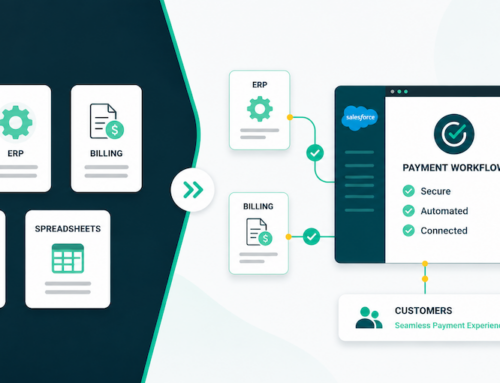
- 100% Salesforce native: Transactions, surcharge lines, receipts, and dashboards live in your CRM.
- Flow-first configuration: Drag-and-drop elements; no reliance on retiring Process Builder.
- Real-time compliance: InterPayments checks card brand, state cap, card type, and transaction amount before authorization and then indemnifies you.
- Payment gateways: Surcharging is available on Authorize.Net, BlueSnap, Braintree, Cybersource, and Network Merchants Incorporated (NMI).
- One-click reporting: Fields for surcharge amount, recovered revenue, and net proceeds roll up into Sales or Service Cloud dashboards.
Reclaim Revenue Without Raising Prices
Credit card processing fees are inevitable; reducing your margins isn’t. A compliant surcharge converts expense into protection, preserving profit without hiding costs in higher sticker prices. With Chargent + InterPayments inside Salesforce, you skip the compliance maze and keep focus where it belongs — on growth.
Ready to reclaim the 2%-3% you’re losing on every transaction? Explore our Consumer Protection Act, watch a demo, and start your free trial today.