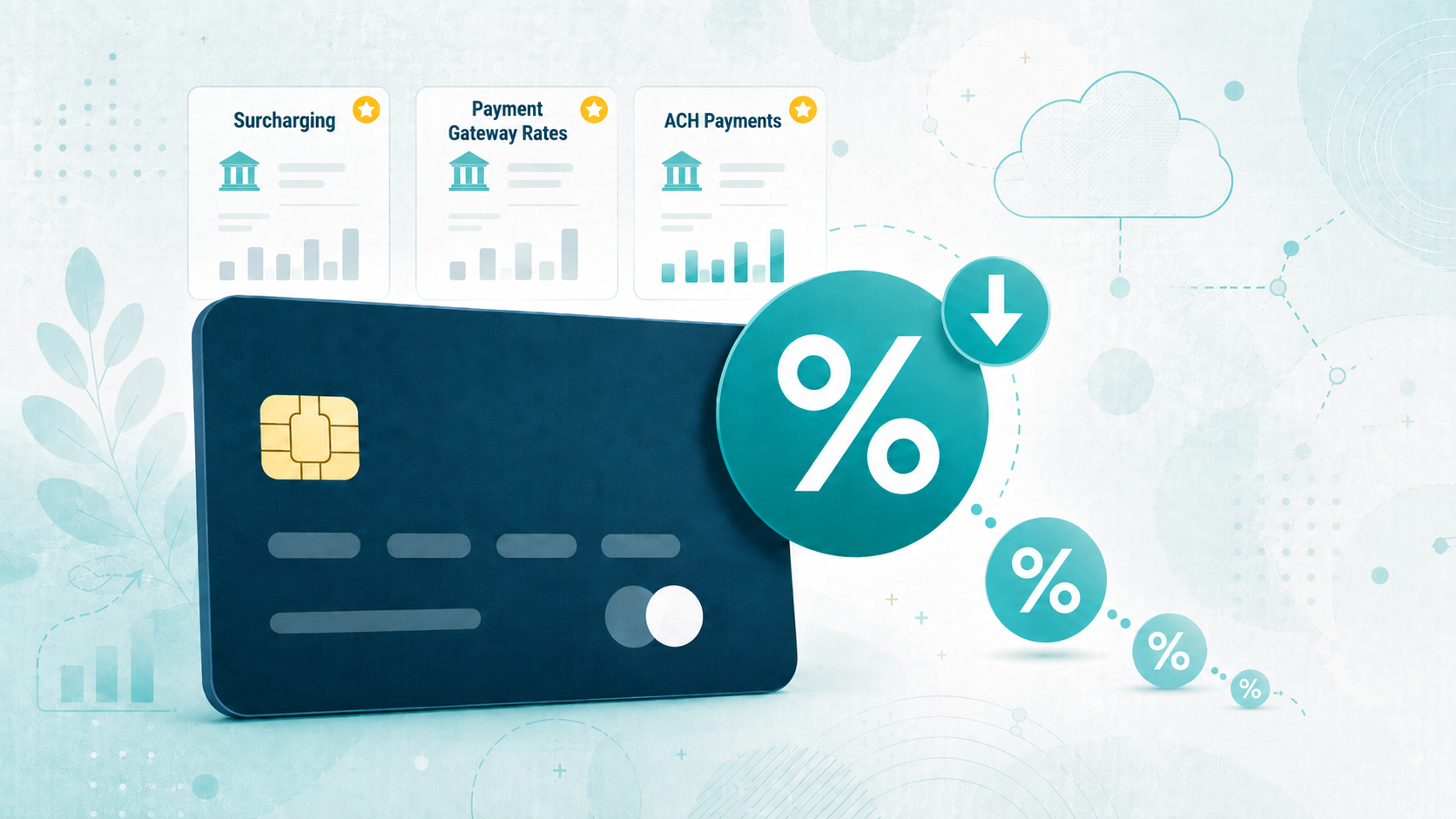
Payment processing fees may appear small when viewed one transaction at a time. Across hundreds or thousands of transactions, though, even a fraction of a percentage point can have a meaningful effect on profitability. If your business collects a high volume of payments, reducing these costs as much as possible should be your goal.
Credit card processing fees commonly fall between 1.5% and 3.5% of the transaction value. The amount a business actually pays can depend on its payment volume, average transaction size, card mix, payment channels, industry, international activity, and pricing agreement.
These costs can often be optimized. Businesses may be able to lower them by negotiating a better processing arrangement, recovering eligible credit card costs, changing the payment methods customers use, or combining all three strategies.
Here’s a deeper look at how you can implement these strategies to start cutting costs today.
1. Let Us Help You Shop Your Payment Processing Rates
Many businesses using Salesforce today selected a payment provider during an implementation project and left that arrangement untouched for years. Meanwhile, their payment volume, average ticket size, customer base, and transaction mix may change considerably.
The pricing agreement that made sense when you processed $500,000 annually may be less competitive when you process $5 million or $50 million.
To stay ahead of outgrowing older provider contracts, it’s vital to review your current payment environment, including:
- Annual and monthly processing volume
- Average transaction size
- Credit card, debit card, and ACH mix
- Online, call center, recurring, and other payment channels
- Domestic and international transactions
- Percentage-based, per-transaction, gateway, and recurring fees
- Refund, dispute, and chargeback costs
- Contract terms and minimum commitments
Together, these factors determine your effective processing cost. An attractive advertised percentage may still produce a higher total cost once fixed transaction fees, international fees, manually entered card fees, gateway charges, and other expenses are included.
More gateway options give you more negotiating flexibility
Chargent provides prebuilt, direct integrations with more than 30 payment gateways, including Stripe, PayPal, Braintree, Cybersource, Authorize.net, Adyen, and Worldpay.
These direct integrations give businesses the flexibility to evaluate new gateway and processor options while preserving the Salesforce payment workflows they already rely on.
Our team can work with you to understand your transaction profile, compare available options, and identify a payment setup that better fits your current needs.
We also maintain particularly strong relationships with Stripe and PayPal. For qualifying businesses, those relationships may help open conversations about custom pricing or more favorable processing arrangements with volume discounts and negotiated pricing.
The right gateway depends on your business. Pricing, supported payment methods, currencies, security capabilities, and authorization performance should all factor into the decision.
Small rate improvements can generate substantial savings
Suppose your business processes $5 million in card payments annually. Reducing your effective processing rate by just 0.4 percentage points would represent approximately $20,000 in annual savings before accounting for fixed fees or other costs.
At higher volumes, even small improvements can justify taking a fresh look at your payment processing agreement.
2. Recover Card Processing Costs With Automated Surcharging
While negotiating a better rate reduces the amount you pay for card acceptance, surcharging addresses the remaining expense by allowing your business to pass eligible credit card processing costs to the customer.
When implemented correctly, surcharging can help businesses:
- Recover eligible credit card processing costs
- Protect margins on card transactions
- Improve cash flow
- Gain greater control over payment economics
- Preserve card acceptance as a convenient customer option
Surcharge management involves several important decisions. Businesses must determine when a surcharge is permitted, which transactions are eligible, what amount can be charged, how the fee must be disclosed, and how regulatory changes affect the payment process.
InterPayments notes that surcharging is governed by more than 60 regulatory bodies, including card networks and state authorities. Among other requirements, surcharges generally cannot exceed the merchant’s actual cost of card acceptance, are commonly subject to a cap of approximately 3%, must be disclosed to the customer, and cannot be applied to debit cards. Regional requirements and restrictions can also vary. It’s complicated, to say the least; tracking and applying these requirements manually creates operational work and compliance risk. This is precisely why we’ve partnered with InterPayments in order to automate surcharging in the Chargent app.
Automated compliance and minimal maintenance
Chargent’s surcharging functionality is powered by InterPayments and built directly into the payment process.
The system automatically determines whether an eligible credit card transaction can be surcharged, calculates the appropriate amount, and presents the fee to the customer as part of the transaction. For Chargent Payment links, you can also make it easy for customers to switch to bank transfer payments to avoid the fee, giving them the choice of how to pay.
As card-brand requirements and regional rules change, the program is updated automatically. Your staff can continue using the payment processes they know without manually maintaining a patchwork of surcharge logic.
The Chargent and InterPayments partnership provides a 100% compliance guarantee backed by complete indemnification. That protection is particularly important because compliant surcharge rates and eligibility can vary by transaction.
Apply surcharging where it makes sense for your business
Chargent also gives you the flexibility to be selective.
You may decide to surcharge:
- Certain customer segments
- Specific order types or transaction values
- Particular products or business lines
- Selected payment channels
- Transactions in eligible geographic locations
- New customers while exempting strategic or long-standing accounts
This flexibility allows you to recover processing costs according to your business priorities instead of applying one policy across your entire customer base.
Clear communication remains essential. Customers should see the surcharge before completing the transaction and understand the payment options available to them. A transparent approach helps turn surcharging into a clear payment choice rather than an unexpected fee.
3. Use Surcharging to Encourage More Customers to Pay by ACH
Surcharging can do more than recover the cost of credit card acceptance. It can also influence customer payment preferences.
Customers may be presented with two clear choices: pay by credit card and cover the eligible processing cost, or pay by ACH without the surcharge.
This approach gives customers control over how they pay while creating a financial incentive to choose ACH.
That shift can create several benefits for your business.
ACH transactions typically cost considerably less
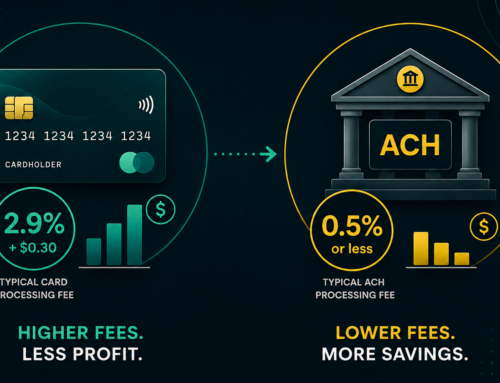
ACH pricing varies by gateway and provider, but it is typically far less expensive than card processing, especially for larger B2B payments. Most payment providers charge a flat fee rather than a percentage for ACH.
For example, Stripe’s current standard U.S. pricing lists online domestic card transactions at 2.9% plus 30 cents. Its standard ACH Direct Debit pricing is 0.8%, capped at $5 per transaction.
Under that pricing, processing a $1,000 payment would cost $29.30 by card and $5 by ACH. That represents a difference of $24.30 on a single transaction. Actual pricing and savings will vary by provider and agreement, of course, but the benefit is clear.
A 2025 Federal Reserve analysis summarized estimates suggesting that Pay-by-Bank transactions may cost merchants 40% to 85% less than credit cards, varying based on transaction size, provider fees, implementation costs, and pricing structure.
For businesses that regularly collect large invoices, deposits, membership dues, insurance premiums, rent, tuition, or recurring B2B payments, the difference can become substantial.
ACH adoption is continuing to grow
Businesses are already moving significant payment volume through ACH.
In 2025, the ACH Network processed 8.08 billion B2B payments representing $63.11 trillion in value. B2B ACH payment volume grew 9.9% compared with the previous year.
Across all categories, the network processed more than 35 billion payments totaling $93 trillion.
The scale and continued growth of ACH demonstrate that bank payments are now a core payment method for many businesses.
Reduce payment failures caused by card expiration dates
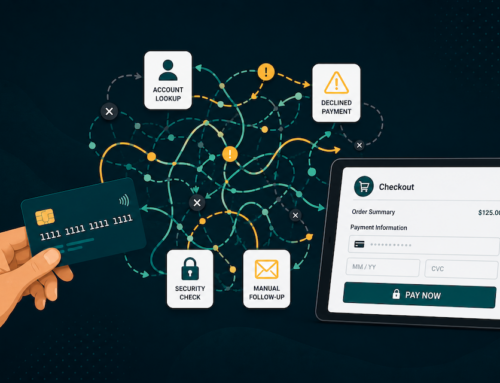
Credit cards typically expire every two to five years. For businesses collecting recurring payments, every expiration creates another opportunity for a scheduled transaction to fail and another customer your staff may need to contact.
ACH payments use bank account and routing information instead of a card number and expiration date. Moving a customer to ACH therefore removes card expiration as one potential source of failed payments.
ACH transactions can still fail because of insufficient funds, closed accounts, revoked authorizations, or other banking issues. Removing expiration-related failures, however, can make recurring collections more predictable and reduce one category of manual payment recovery work.
Turn surcharging into an ACH migration strategy
An effective ACH strategy actively communicates the value of switching and gives customers a simple way to make the change.
A structured ACH migration campaign might include:
- Identifying customers with high-value or recurring card payments.
- Estimating the surcharge those customers would pay by continuing to use a credit card.
- Presenting ACH as a simple, surcharge-free alternative.
- Providing a secure self-service method for adding a bank account.
- Saving the authorized ACH payment method as a token for future transactions.
- Following up with customers who continue to use higher-cost card payments.
We will cover this process in more detail in our upcoming blog post about encouraging your customers to switch to ACH payments.
Combine All Three Strategies for Greater Savings
These three approaches can work together.
A business can negotiate a better underlying processing rate, recover eligible costs on the credit card transactions it continues to accept, and use that surcharge program to move more recurring or high-value payments to ACH.
Together, those strategies can help you:
- Lower the cost of each card transaction
- Recover more of the remaining eligible card expense
- Increase the share of lower-cost ACH payments
- Reduce expiration-related recurring payment failures
- Improve payment predictability and cash flow
- Spend less staff time resolving preventable payment issues
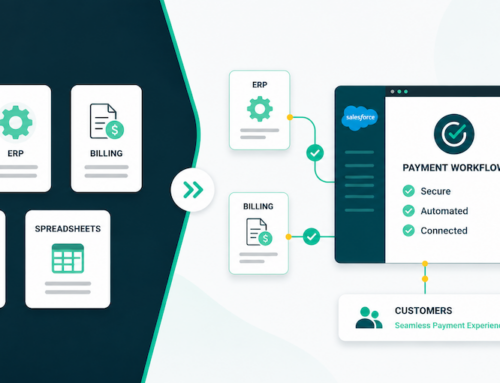
Chargent gives businesses the flexibility to pursue these savings while keeping payment activity, customer information, and automation connected in Salesforce.
Ready to Take a Closer Look at Your Payment Costs?
Bring us your current processing statements and payment profile. We can help you review your volume, average transaction size, current rates, payment methods, and business requirements.
From there, we can explore whether a different gateway arrangement, automated surcharging, a greater emphasis on ACH, or a combination of all three could help your business retain more of the revenue it collects.
Reach out today if you’re ready to reduce your processing fees.