For many nonprofits, Salesforce is the system of record for donor data, fundraising activity, and constituent engagement. But when it comes to accepting and managing donations, even organizations with mature Salesforce implementations often run into friction.
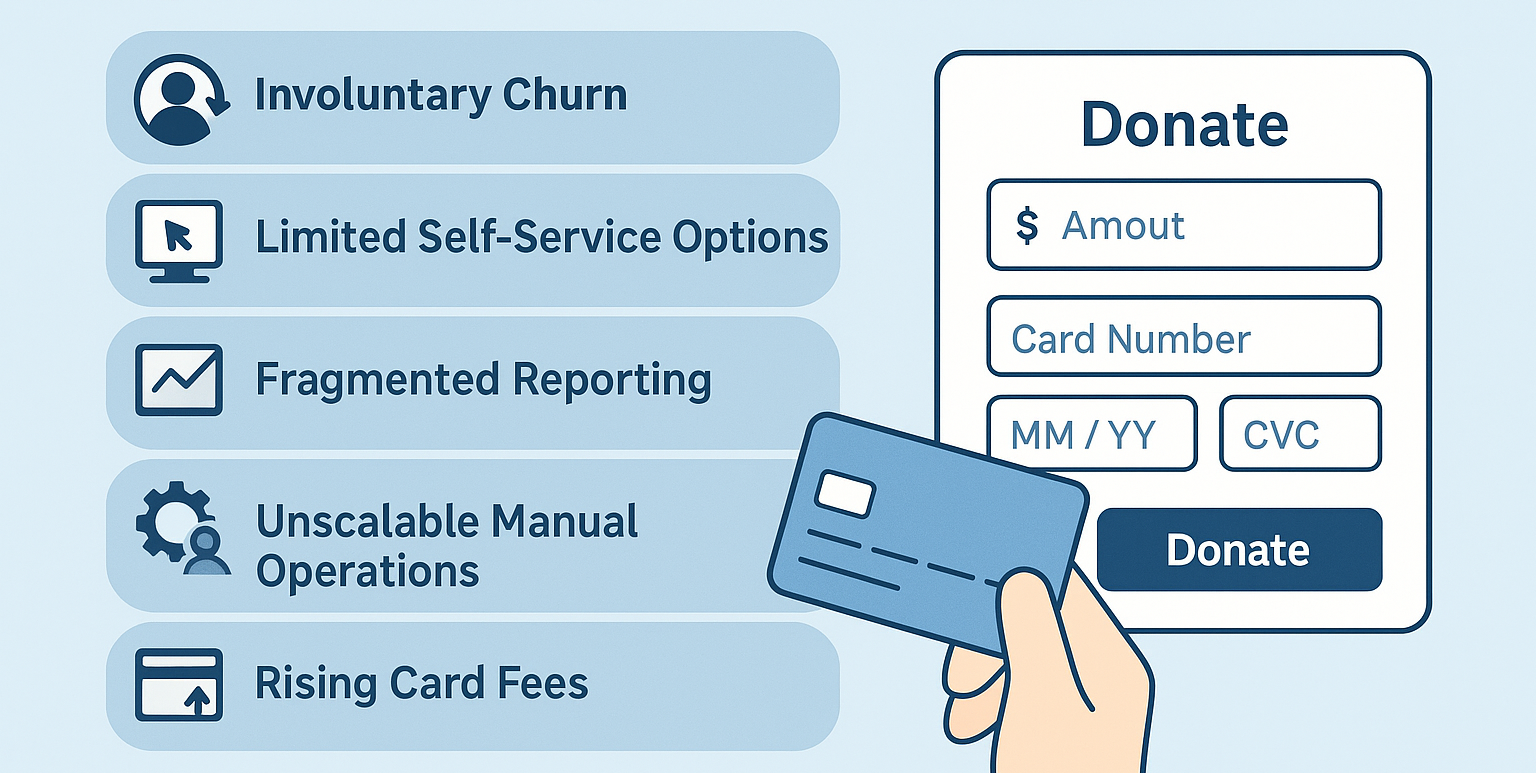
At scale, small donation issues quickly turn into larger problems: lost revenue, frustrated donors, increased staff workload, and delayed reporting. Below are the five most common donation-related pain points nonprofits experience in Salesforce, and why addressing them is critical to sustaining growth and donor trust.
1. Failed Donations and Involuntary Donor Churn
Recurring donations have become the foundation of predictable nonprofit revenue, yet failed transactions remain one of the biggest drivers of involuntary donor churn.
Common causes include:
- Expired or replaced credit cards
- Insufficient funds or bank declines
- Processor or network errors
- Rigid retry logic that doesn’t adapt to donor behavior
When a recurring donation fails and isn’t recovered quickly, many donors never reengage, often without realizing their contribution stopped. For nonprofits, this results in silent revenue loss and declining donor lifetime value.
Without visibility into why donations fail – and automation to save them – teams are forced into reactive, manual follow-up.
2. Limited Donor Self-Service for Payment Updates
Donors increasingly expect simple, digital self-service – including the ability to update their payment details without contacting support.
Yet many nonprofits still rely on:
- Staff-assisted updates to credit cards or bank accounts
- Email chains or phone calls to resolve failed donations
- Manual updates across systems
This creates unnecessary friction for donors and pulls staff away from higher-value work. It can also introduce compliance risk when sensitive donation data is handled outside secure, purpose-built tools.
Cart abandonment isn’t only an issue with eCommerce; it impacts nonprofits as well. The Baymard Institute found that nearly 20% of online cart abandonment in 2025 was due payment experiences that took too long or were too complex. This illustrates what happens when self-service isn’t done right; when donors can’t quickly update their payment details themselves, they’re far more likely to abandon the donation altogether.
3. Fragmented Reporting Between Donations and Revenue
Salesforce is powerful for tracking donor engagement, but donation transaction data often lives in separate systems.
This fragmentation leads to:
- Donation records that don’t clearly match settled funds
- Time-consuming reconciliation between Salesforce and accounting tools
- Limited insight into donor lifetime value, especially for small but frequent donations
- Reduced confidence in revenue reporting
Finance and operations teams are left asking basic questions that should be easy to answer:
- How much donation revenue actually settled this month?
- Which campaigns or payment methods are underperforming?
- Where are we losing donations – and why?
Without unified payment reporting inside Salesforce, decision-making becomes slower and less reliable.
4. Manual Donation Operations That Don’t Scale
As donation volume grows, manual processes quickly become a bottleneck.
Many nonprofits struggle with:
- Retrying failed donations by hand
- Sending one-off reminder emails
- Processing refunds or adjustments outside Salesforce
- Updating donation records across disconnected systems
What works at a small scale breaks down as programs expand. Staff time is consumed by resolving payment issues instead of donor engagement, stewardship, and mission-focused work. Over time, these inefficiencies increase operating costs and limit fundraising growth.
5. Credit Card Fees and Rising Donation Costs
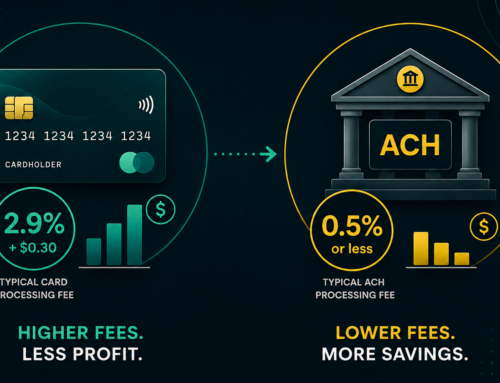
For nonprofits, every dollar matters – yet credit card processing fees quietly eat into donation revenue.
Common challenges include:
- Limited visibility into how much fees are costing the organization
- Inability to offset or recover fees transparently
- One-size-fits-all approaches that don’t account for donor preferences
While fees are often accepted as “the cost of doing business,” many nonprofits are now re-evaluating how they manage them – especially as digital and recurring donations continue to grow.
Some organizations explore donor-friendly surcharging strategies, where permitted, to offset processing costs without disrupting the donation experience. When implemented thoughtfully and transparently, this can be one of the least intrusive ways to reduce fundraising costs while preserving donor choice.
Turning Donations into a Strength – Not a Bottleneck
For nonprofits, donations shouldn’t be a source of operational strain. When managed natively inside Salesforce, they support stronger donor relationships, more predictable revenue, and leaner operations.
This is where many organizations begin to move away from disconnected tools and manual workarounds, and toward payment solutions built directly for Salesforce.
Chargent allows nonprofits to manage one-time and recurring donations, handle declines intelligently, and maintain secure donation data alongside donor records – all without leaving Salesforce.
Just as importantly, Chargent extends donation management into Salesforce’s Agentforce Service Portal (formerly Experience Cloud) with clicks, not code. Through branded, self-service portals, donors can:
- Update expired or replaced payment methods
- Resolve failed recurring donations on their own
- View donation history securely
This reduces administrative workload for internal teams while meeting modern donor expectations for convenience and transparency.
For nonprofits concerned about rising processing costs, Chargent also includes compliant surcharging, giving organizations a subtle way to offset credit card fees while maintaining trust and choice for donors.
Finally, create friendly reminders for failed donation payments using Automated Collections, automatically notifying the donor or retrying the donation.
Donations That Support Your Mission – Not Slow It Down
As nonprofits grow, the gap between donor expectations and legacy donation workflows becomes increasingly visible. Failed donations, manual processes, and hidden costs don’t just impact revenue — they divert focus from the mission itself.
By treating payments as a core part of the Salesforce ecosystem — and by leveraging tools designed to work natively within it — nonprofits can reduce friction, recover more recurring revenue, and operate more sustainably.
For organizations already using Salesforce, especially those engaging donors through Agentforce Service Portal, modernizing donation management is often one of the highest-impact improvements they can make.
Excited to solve your nonprofit payment challenges? Contact us today!